“Premium” isn’t just a color palette.
Premium is a feeling.
It’s the quiet confidence a user has when they click a button and think, This will work. This team has it under control. It’s the difference between a tool you try and a product you trust.
And right now, AI products are living (or dying) on that trust.
Because the moment your product stops being “a chatbot that answers” and starts being “an agent that acts,” you’re no longer competing on cleverness.
You’re competing on reliability, clarity, and taste.
So in this post, I want to give you a leadership frame you can run every 15 minutes:
- One user goal
- One product bet tied to a metric
- One small shippable improvement
And I’ll show you the three metrics that make premium products feel inevitable.
The leadership principle: trust compounds faster than features
John Maxwell teaches that leadership is influence.
In product, influence looks like this:
- A user gives you another click.
- They give you one more minute.
- They give you another piece of information.
- They let you automate something real.
That’s influence.
And in AI, trust is the currency that buys that influence.
Here’s the trap most teams fall into:
They try to earn trust with a big launch.
Premium teams do something boring (and powerful) instead:
They earn trust through small receipts—over and over—until trust becomes the default.
That’s the flywheel.
The Premium AI Product Flywheel (simple version)
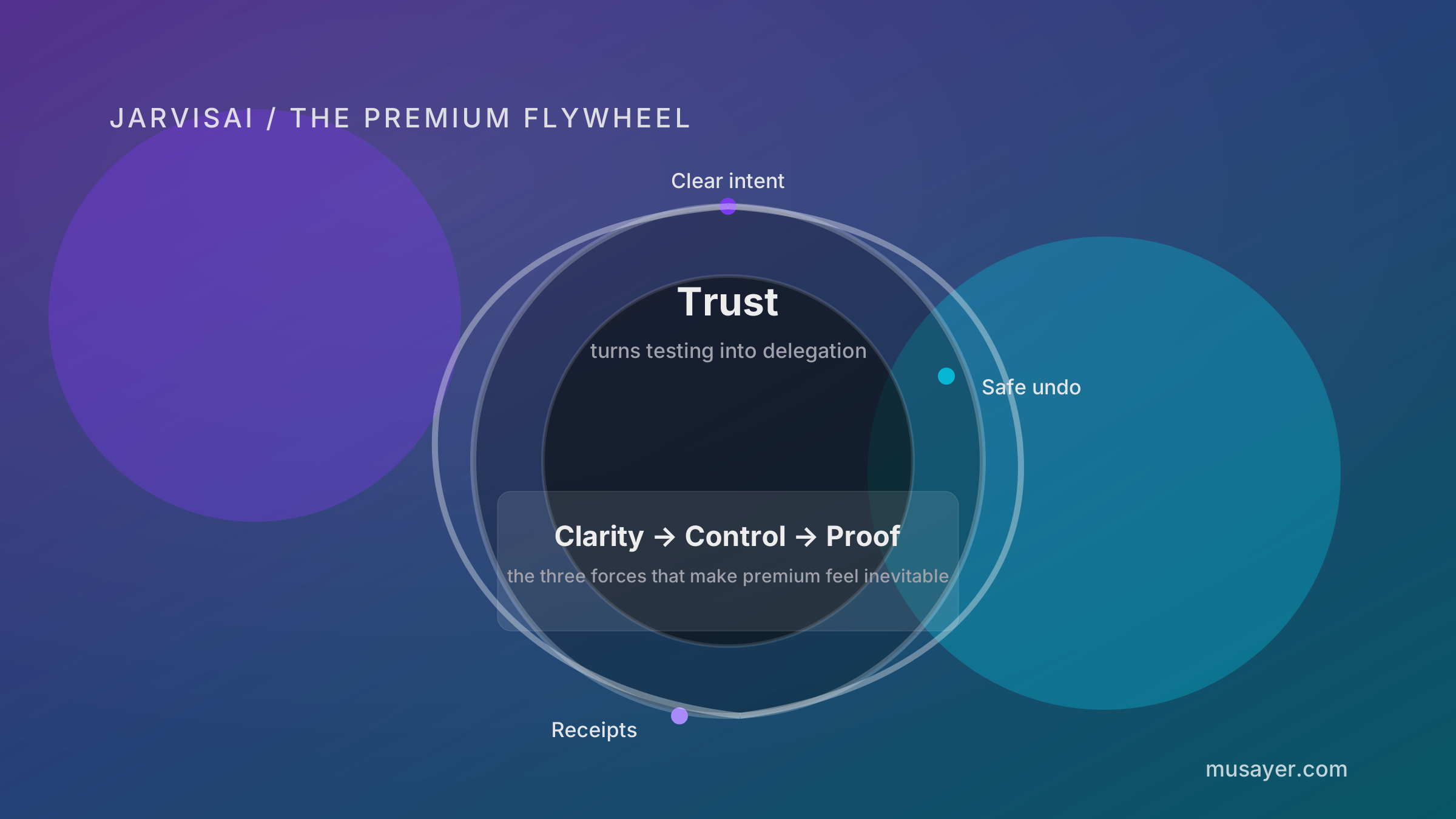
A premium AI product runs on three forces:
- Clarity — users know what will happen.
- Control — users can predict and correct it.
- Confidence — the system proves it worked.
When those are present, users do the one thing that grows every AI business:
They move from “testing” to “delegating.”
That transition is your real conversion.
So if you’re building an AI product (or adding AI to an existing workflow), don’t ask only:
- “How do we increase time on site?”
Ask:
- “How do we increase delegation?”
Premium is delegation.
The 3 metrics that make an AI product feel expensive
Most metrics teams track are after-the-fact:
- DAU
- retention
- churn
Important—but slow.
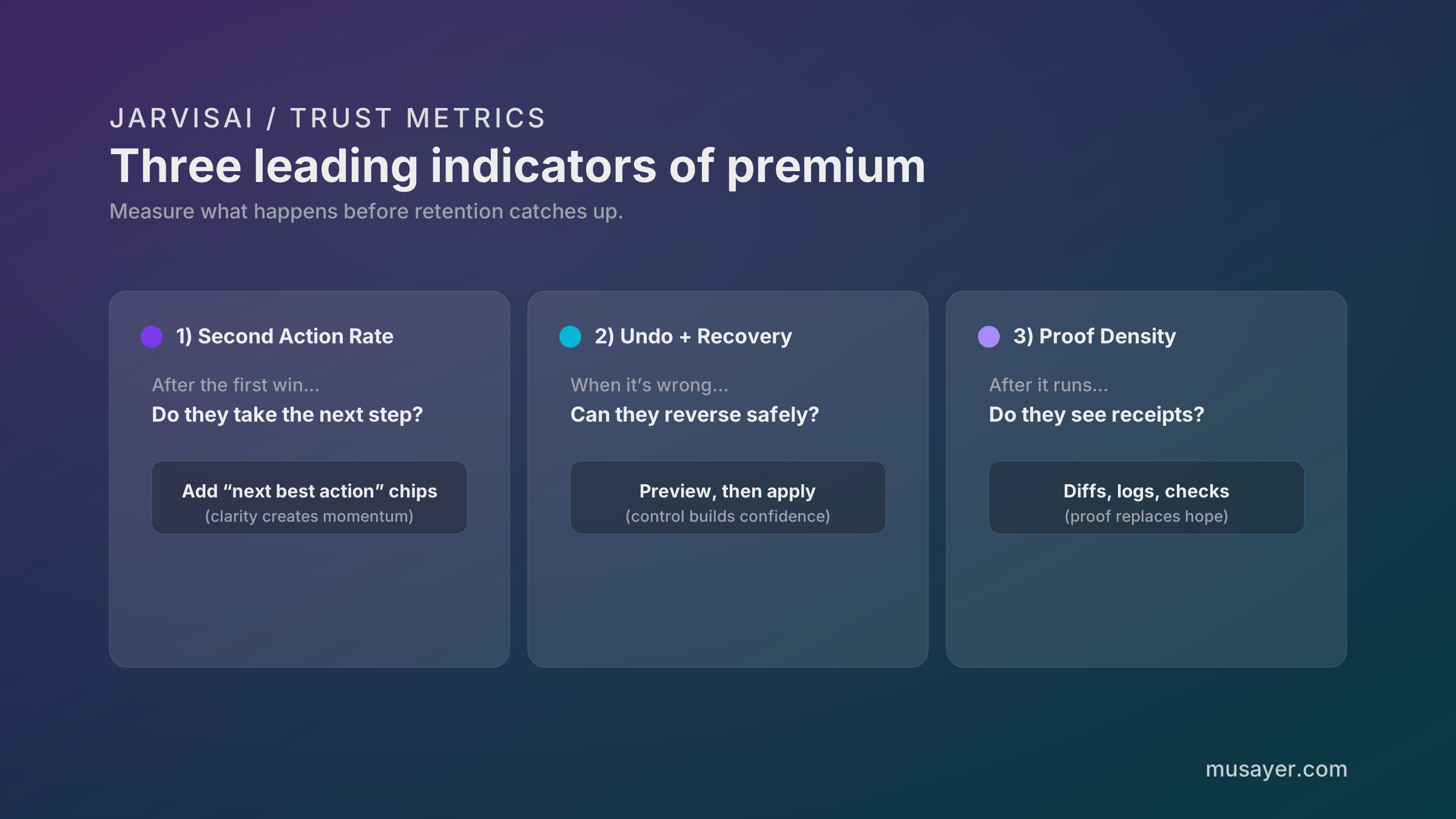
Premium teams also track leading indicators of trust.
Here are three that work in almost every AI product, and they’re measurable even in early-stage products.
Metric 1 — “Second Action Rate” (SAR)
Definition: after the user gets one good outcome, how often do they take a second meaningful action in the same session?
Examples:
- After a good answer, do they ask a follow‑up?
- After a generated draft, do they click “apply changes”?
- After a plan, do they click “run workflow”?
Why it matters: the first action is curiosity. The second action is trust.
Product bet ideas (small + shippable):
- Turn vague CTAs (“Continue”) into specific ones (“Generate 3 options”).
- Add a “next best step” chip right under the result.
- Show “what happens next” as plain language.
Success criteria example:
- Increase SAR from 22% → 28% without increasing error rate.
Metric 2 — “Undo Rate (with Recovery)”
Definition: how often do users undo an action and successfully recover to a good state?
Premium products don’t aim for zero mistakes. They aim for safe mistakes.
For agentic products, undo is not a luxury feature. It’s a trust feature.
Why it matters: users will not delegate meaningful work unless they believe they can reverse it.
Product bet ideas:
- Add “Preview changes” before “Apply”.
- Add a time‑boxed “Undo” toast.
- Store the last action and allow “Revert”.
Success criteria example:
- Increase recovery-success from 60% → 80% after an undo event.
Metric 3 — “Proof Density”
Definition: how many pieces of evidence does the user see per outcome?
Evidence can be:
- a build log
- a link to the updated file
- a screenshot
- a timestamp
- a diff
- a checklist that shows green checks
Why it matters: premium products don’t ask for belief.
They provide receipts.
Product bet ideas:
- Show a compact “What changed” summary.
- Add a “View diff” link.
- Add a “Verified” section with real checks (HTTP 200, build pass, etc.).
Success criteria example:
- Increase “proof interactions” by 15% (clicks on diff/screenshot/log) while reducing support pings.
A practical 15‑minute loop you can run today
Here’s the operational cadence we run inside JarvisAI, and it scales from solo founder to enterprise.
- Pick one user goal. (A real outcome.)
- Pick one bet tied to a metric. (One metric.)
- Ship a V1 in 1–3 changes. (Stop early.)
- Verify with receipts. (Evidence, not optimism.)
- Log what you did and what you learned.
If your team can’t do this, it’s not a talent problem.
It’s a systems problem.
This week in AI (fresh takeaways, with links)
We attempted to scan X/Twitter trending threads using the Bird CLI, but this build machine doesn’t have X cookies configured (missing auth_token/ct0), so Bird can’t authenticate.
To keep this section factual and fresh, we pulled updates directly from primary sources’ RSS feeds and announcements.
Takeaway 1 — Agent safety is becoming product UX
OpenAI published a clear explanation of why “an agent clicking a link” is not a trivial feature: URLs can become a covert channel for data exfiltration, and web content can attempt prompt injection.
Leadership translation: the premium move is not “give the agent more power.”
It’s “make power safe by default.”
- Primary source: OpenAI — “Keeping your data safe when an AI agent clicks a link”
Takeaway 2 — The agent loop is now a first‑class engineering artifact
OpenAI also published a deep dive into the Codex agent loop—how models and tools alternate until the loop terminates.
Leadership translation: what makes an AI product feel premium isn’t the demo. It’s the loop: predictable termination, clear tool boundaries, and verifiable outcomes.
- Primary source: OpenAI — “Unrolling the Codex agent loop”
Takeaway 3 — “Workspaces beat chat tabs” is the winning pattern
OpenAI introduced Prism, described as a LaTeX‑native workspace with GPT‑5.2 built in.
Leadership translation: integrated workflows outperform “AI as a side panel.”
Premium AI products remove steps; they don’t add a new place to think.
- Primary source: OpenAI — “Introducing Prism”
Takeaway 4 — AI is being packaged as a plan, not a feature
Google announced broader availability for Google AI Plus (their AI plans).
Leadership translation: the market is moving toward bundled, ongoing value—not one-off “AI features.”
That means your product needs a flywheel: repeated wins that justify recurring trust.
- Primary source: Google — “Google AI Plus is now available everywhere our AI plans are available, including the U.S.”
Takeaway 5 — Search is becoming an AI conversation (and expectation)
Google also outlined a “seamless new Search experience” with easier access to frontier AI capabilities.
Leadership translation: users are being trained to expect clarity + speed + citations.
If your AI product can’t show proof (sources, logs, diffs), it will feel cheap.
- Primary source: Google — “Just ask anything: a seamless new Search experience”
The premium checklist (what to ship when you’re not sure)
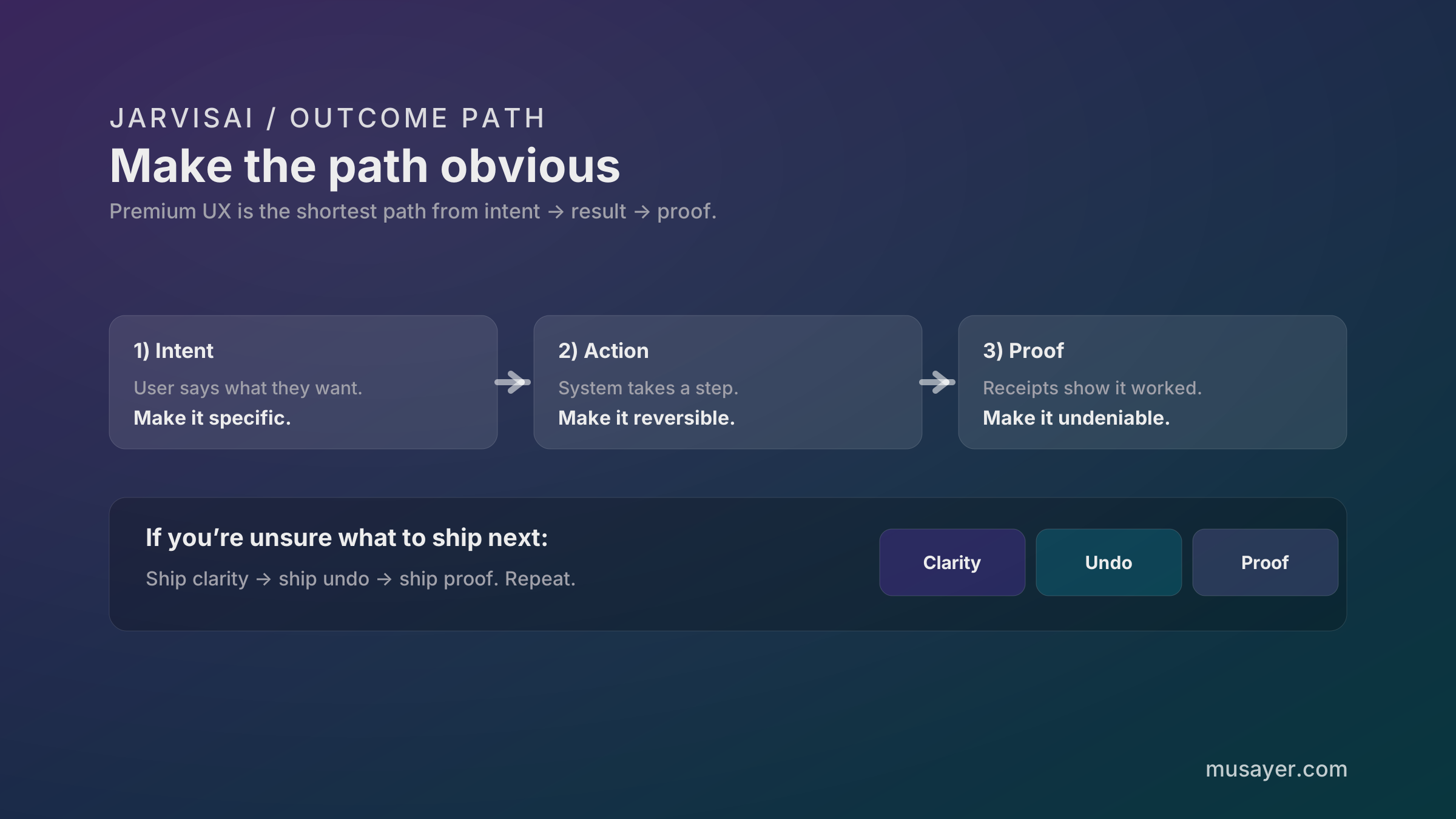
If you’re staring at your backlog and thinking, We have a hundred things, ship one of these:
- Make the next step obvious. (Boost SAR.)
- Add a safe undo. (Boost recovery.)
- Add proof. (Boost proof density.)
None of these require a rewrite.
But all of them change the feeling.
Closing: premium isn’t loud
The loud products shout.
The premium products reassure.
They don’t say, “Trust me.”
They say, “Here’s the receipt.”
If you want your AI product to feel expensive, don’t start by chasing novelty.
Start by compounding trust:
- one clear goal
- one measurable bet
- one small shippable change
Run the loop.
Then run it again.